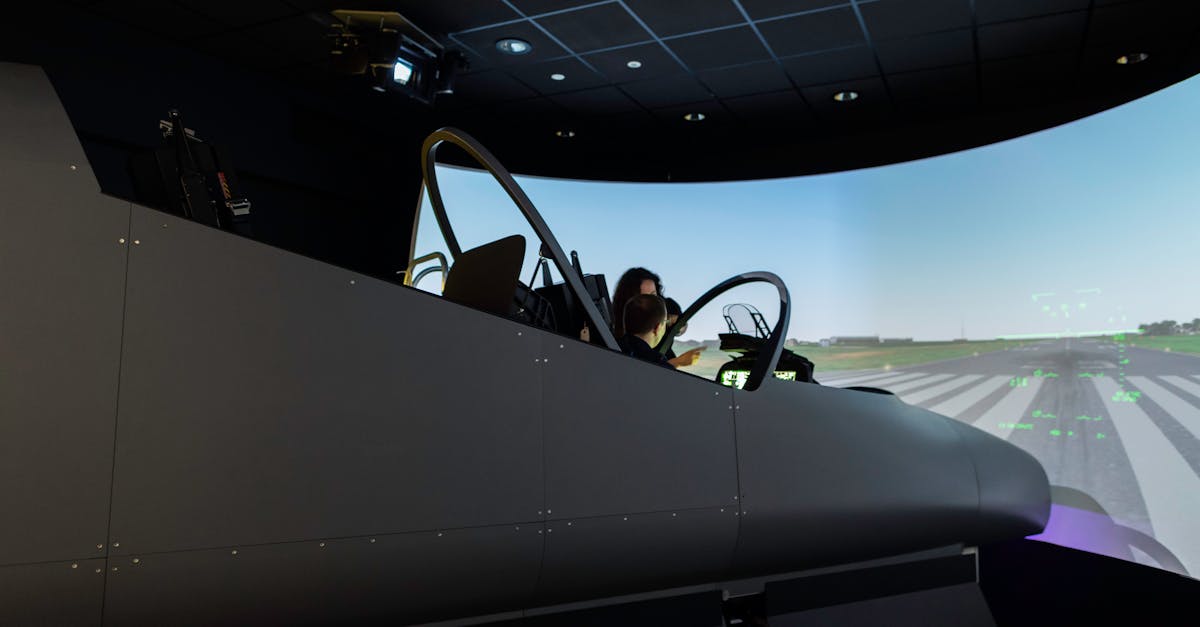
The aviation industry is undergoing a profound transformation. By 2026, the path to professional flight certification looks markedly different from even five years ago.
The era of relying solely on “steam-gauge” analog instruments and logging arbitrary flight hours is receding. A digitally integrated ecosystem now defines modern pilot education.
This guide provides a technical breakdown of the current landscape. We analyze the core components reshaping how pilots train, from Extended Reality (XR) to Competency-Based Training and Assessment (CBTA).
The Rise of Extended Reality (XR) and Mixed Reality (MR)
Simulation has always been critical to flight training. However, the fidelity and accessibility of these tools have reached new heights.
Extended Reality (XR)—an umbrella term encompassing virtual, augmented, and mixed reality—is now a mainstream pedagogical tool. It is no longer a novelty but a core component of the curriculum.
Procedural Familiarization
XR excels at procedural familiarization. Trainees can practice complex cockpit flows and emergency checklists in a safe, repeatable environment before stepping into a physical aircraft.
This method reduces cognitive load during actual flight. Key benefits include:
- Mastering switch locations and system interactions without engine costs.
- Practicing rare emergency scenarios (engine fires, system failures) repeatedly.
- Building spatial awareness of the cockpit layout before first flight.
Muscle Memory Development
Mixed Reality (MR) takes this further by overlaying digital elements onto the physical world. A trainee can see virtual instruments superimposed on a real cockpit mockup.
This hybrid approach accelerates muscle memory development for critical motor skills. It bridges the gap between abstract knowledge and tactile execution.
Competency-Based Training and Assessment (CBTA)
Perhaps the most significant shift in certification philosophy is the move toward Competency-Based Training and Assessment (CBTA). This framework prioritizes demonstrated skill over the mere accumulation of flight hours.
Regulators like the FAA and EASA are increasingly adopting CBTA standards. The logic is simple: a pilot who can consistently perform to a high standard is safer than one who has simply sat in a cockpit for a fixed time.
How CBTA Works
Under CBTA, training is organized around specific competencies. These are observable behaviors that define effective performance.
- Knowledge: Understanding aircraft systems, regulations, and procedures.
- Application: Correctly executing maneuvers and managing automation.
- Decision-Making: Assessing situations and choosing optimal courses of action.
- Communication: Coordinating effectively with crew and ATC.
- Leadership: Demonstrating command authority and teamwork.
Trainees are assessed against these competencies throughout their program. Progression is based on mastery, not calendar time.
Implications for the 2026 Pilot
For aspiring professionals, CBTA means a more efficient and rigorous path. Those who grasp concepts quickly can advance faster.
It also places a premium on quality of practice. Simply “doing the time” is no longer sufficient. Each training session must be purposeful and focused on measurable outcomes.
The Mechanics of “Zero-Flight-Time” Type Ratings
One of the most debated innovations in modern certification is the “Zero-Flight-Time” (ZFT) type rating. This concept allows a pilot to qualify on a new aircraft type without ever flying the physical airplane.
It is enabled by Full Flight Simulators (FFS) qualified to the highest level (Level D). These devices replicate the aircraft’s behavior with extraordinary fidelity.
The Technical Requirements
For a ZFT rating to be valid, the simulator must meet stringent criteria. It must accurately model all flight phases, including takeoff, landing, and system failures.
- Motion system with six degrees of freedom.
- High-fidelity visual system with a wide field of view.
- Accurate aerodynamic and engine models validated against flight test data.
- Approved by the relevant regulatory authority for the specific aircraft type.
The training program for a ZFT rating is intensive. It typically involves several weeks of simulator sessions, followed by a check ride in the simulator itself.
The first flight in the actual aircraft is often a supervised line operation. This approach saves significant fuel and reduces environmental impact while maintaining safety standards.
AI-Powered Debriefing and Performance Analysis
Data analytics have entered the training cockpit. Artificial intelligence now powers debriefing tools that analyze a pilot’s maneuvers against industry benchmarks.
These systems provide objective, granular feedback. They identify deviations in parameters like altitude, airspeed, heading, and vertical speed with precision.
Real-Time Maneuver Analysis
During a training flight or simulator session, data is continuously recorded. AI algorithms then process this data to reconstruct the maneuver.
The system can highlight specific moments where performance deviated from the standard. For example, an approach that was slightly high on glide path or a turn that lacked coordination.
Objective Benchmarking
Perhaps the most powerful feature is benchmarking. The AI compares a pilot’s performance against a database of professional standards.
- Identifies consistent weaknesses that require focused practice.
- Provides visual overlays showing ideal vs. actual flight paths.
- Tracks improvement over multiple sessions with quantifiable metrics.
- Reduces subjective bias in instructor evaluations.
This technology transforms the debrief from a subjective discussion into an evidence-based learning session. Trainees see exactly where they need to improve and can track their progress.
Regulatory Pathways for eVTOL and Electric Aircraft
The rise of electric and vertical takeoff and landing (eVTOL) aircraft introduces new training requirements. These vehicles operate differently from conventional fixed-wing or rotorcraft.
Regulators are actively developing specific certification pathways for these novel designs. The training paradigm must adapt accordingly.
Unique Training Considerations
eVTOL aircraft introduce new flight regimes, such as transition between vertical and horizontal flight. Pilots must master these unique handling characteristics.
- Battery management and energy awareness for electric propulsion.
- Distributed electric propulsion (DEP) system failures.
- Operations in urban environments with constrained landing zones.
- Integration with existing air traffic management systems.
Training programs for eVTOL are often built from the ground up. They leverage the same digital tools—XR, simulation, and AI analytics—to prepare pilots for these advanced platforms.
Navigating the 2026 Standards
The modern pilot candidate must be technologically literate. Understanding the tools and frameworks discussed here is no longer optional—it is foundational.
Programs that integrate XR for procedural training, CBTA for competency assessment, and AI for performance analysis offer a clear advantage. They produce pilots who are safer, more efficient, and better prepared for the demands of professional aviation.
The technical facts are clear: the path to certification in 2026 is data-driven, competency-focused, and technologically enhanced. Aspiring pilots who embrace this ecosystem position themselves for success in a rapidly evolving industry.
- Water Recovery 2026 – 23/04/2026
- Roofing Systems 2026 – 23/04/2026
- Plumbing Systems 2026 – 23/04/2026

Leave a Reply